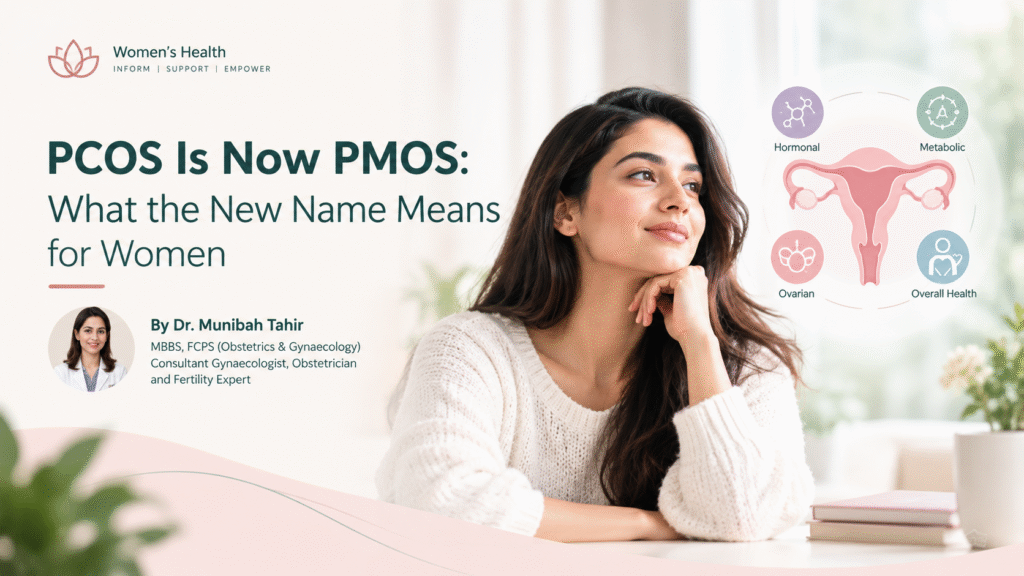
For decades, women with irregular periods, acne, unwanted facial hair, weight concerns or difficulty conceiving have been diagnosed with polycystic ovary syndrome—PCOS.
In May 2026, the condition was officially renamed Polyendocrine Metabolic Ovarian Syndrome, or PMOS. This international change followed years of collaboration among healthcare professionals, researchers and women living with the condition.
PMOS is not a new disease. It is the new and more accurate name for the condition previously called PCOS. Monash University PMOS update
What Does PMOS Stand For?
PMOS means Polyendocrine Metabolic Ovarian Syndrome.
Each part of the name reflects how the condition affects the body:
- Polyendocrine: More than one hormonal pathway may be involved.
- Metabolic: Insulin resistance, weight, cholesterol and blood glucose may be affected.
- Ovarian: Ovulation and ovarian function can be disturbed.
- Syndrome: Different women can experience different combinations of symptoms.
The new name recognises that this is not simply an ovarian problem. It is a complex hormonal, reproductive and metabolic condition that may also affect the skin, emotional well-being and long-term health.
Why Was PCOS Renamed PMOS?
The term “polycystic ovary syndrome” was often misleading for several reasons.
The “cysts” are not true ovarian cysts
The small structures seen on ultrasound are usually immature ovarian follicles, not dangerous or pathological cysts.
Ovarian cysts are not necessary for diagnosis
A woman may have PMOS even when her ovaries do not show polycystic morphology on ultrasound.
Similarly, an ultrasound showing multiple follicles does not automatically mean that a woman has PMOS.
The condition affects more than the ovaries
The old name placed too much emphasis on ultrasound findings and did not adequately represent the condition’s hormonal and metabolic effects.
PMOS may involve:
- Irregular or absent ovulation
- Higher androgen levels
- Insulin resistance
- Increased risk of type 2 diabetes
- Abnormal cholesterol levels
- Fertility difficulties
- Anxiety, depression or body-image concerns
- Increased risk of endometrial problems when periods remain absent for long intervals
The new terminology is intended to improve understanding, reduce confusion and encourage more comprehensive care. The condition is estimated to affect approximately one in eight women worldwide. Endocrine Society announcement
Is PMOS Different From PCOS?
No. PMOS and PCOS refer to the same underlying condition.
The name has changed, but your previous diagnosis remains valid. You do not need repeat testing simply because the terminology has changed.
During the transition, doctors, laboratories and online resources may use terms such as:
- PMOS
- PCOS
- PCOS/PMOS
- PMOS, previously known as PCOS
The transition to the new name will occur gradually, so patients may continue to encounter “PCOS” for some time.
What Are the Symptoms of PMOS?
Symptoms differ significantly between women and may change throughout life.
Common symptoms include:
- Irregular menstrual cycles
- Periods occurring many weeks or months apart
- Absent periods
- Difficulty predicting ovulation
- Difficulty becoming pregnant
- Excess facial or body hair
- Acne or oily skin
- Thinning scalp hair
- Weight gain or difficulty managing weight
- Darkened, velvety skin around the neck, underarms or groin
- Skin tags
- Low mood, anxiety or reduced self-confidence
- Sleep problems, including possible sleep apnoea
A woman does not need to have every symptom. PMOS can also occur in women who are not overweight.
How Is PMOS Diagnosed?
There is no single test that confirms PMOS. Diagnosis is based on a combination of medical history, symptoms, examination and selected investigations.
In adults, PMOS is generally diagnosed when at least two of the following three features are present after excluding other possible causes:
- Irregular or absent ovulation, usually indicated by irregular menstrual cycles.
- Clinical or biochemical hyperandrogenism, such as excess facial hair, significant acne or raised androgen levels.
- Polycystic ovarian morphology on ultrasound or, in appropriate adults, an elevated anti-Müllerian hormone level according to validated standards.
If a woman already has irregular cycles and clear hyperandrogenism, an ultrasound may not be necessary to establish the diagnosis.
Other conditions can resemble PMOS, including thyroid disorders, raised prolactin, non-classic congenital adrenal hyperplasia, Cushing syndrome and androgen-secreting tumours. Testing should therefore be selected according to the patient’s history and examination.
PMOS Diagnosis in Teenagers
Diagnosis in adolescents requires special care because acne, irregular periods and multifollicular ovaries can be normal during puberty.
In adolescents, both of the following are generally required:
- Menstrual irregularity beyond what is expected for the number of years since the first period
- Clinical or biochemical evidence of raised androgens
Ultrasound appearance and AMH should not be used alone to diagnose PMOS during adolescence. Girls who have some features but do not meet the full criteria may be considered at risk and reviewed over time.
Does Every Woman With Multiple Follicles Have PMOS?
No. An ultrasound finding alone is insufficient.
Some women naturally have a higher number of ovarian follicles without irregular periods, increased androgens or metabolic concerns. This is called polycystic ovarian morphology, but it is not automatically PMOS.
Diagnosis should never be made only because an ultrasound report states “polycystic ovaries.”
Can PMOS Cause Infertility?
PMOS is a common cause of ovulation-related infertility. When ovulation is irregular or absent, the opportunity for fertilisation becomes less predictable.
However, having PMOS does not mean that pregnancy is impossible. Many women conceive naturally, while others may need treatment such as:
- Lifestyle optimisation
- Ovulation induction
- Timed intercourse
- Intrauterine insemination in selected cases
- IVF or ICSI when clinically indicated
Before starting treatment, both partners should be assessed because fertility difficulties may have more than one contributing factor.
How Is PMOS Treated?
There is no single treatment suitable for every woman. Management should be based on the patient’s symptoms, reproductive plans, metabolic health and personal priorities.
Lifestyle and metabolic health
Healthy eating, regular physical activity, adequate sleep and sustainable weight management can improve metabolic and reproductive health.
The goal should be long-term health, not crash dieting. Even women with a normal body mass index benefit from exercise, balanced nutrition and metabolic screening.
Irregular periods
Women who go for prolonged intervals without menstruation may require treatment to protect the endometrium. Options can include:
- Combined hormonal contraceptive pills
- Cyclical progesterone
- A progesterone-releasing intrauterine system in suitable patients
The most appropriate option depends on contraception needs, symptoms and medical eligibility.
Acne and unwanted facial hair
Treatment may include hormonal contraception, cosmetic hair-removal methods and selected anti-androgen medicines. Anti-androgen medication requires reliable contraception because it may harm a developing male fetus.
Insulin resistance and metabolic concerns
Metformin may be considered in selected women, particularly when metabolic risk, insulin resistance, prediabetes or certain fertility-related indications are present. It is not required for every woman with PMOS.
Fertility treatment
For anovulatory infertility associated with PMOS, ovulation-induction medication may be recommended after proper assessment. Treatment should be monitored to improve effectiveness and reduce the risk of multiple pregnancy or excessive ovarian response.
The name change from PCOS to PMOS does not mean that every patient needs a different medicine. It encourages doctors and patients to look beyond menstrual cycles and ovarian ultrasound and consider the woman’s complete health.
Does PMOS Increase Pregnancy Risks?
Women with PMOS may have an increased risk of:
- Gestational diabetes
- Pregnancy-related hypertension
- Pre-eclampsia
- Miscarriage in some clinical circumstances
- Preterm birth
- Excessive weight gain during pregnancy
This does not mean complications will definitely occur. Preconception counselling, appropriate weight and metabolic assessment, early antenatal care and timely screening can reduce risk and support a healthier pregnancy.
Long-Term Health Monitoring
PMOS is a lifelong condition, although its symptoms may change with age. Periodic assessment may include:
- Blood pressure
- Blood glucose or an oral glucose tolerance test where indicated
- Cholesterol levels
- Weight and waist-related risk assessment
- Menstrual regularity
- Symptoms of anxiety or depression
- Sleep problems
- Endometrial protection in women with prolonged absence of periods
PMOS may increase certain risk factors for cardiovascular disease, but it does not mean that every woman will develop heart disease or diabetes. Early recognition and preventive care are important.
Common Myths About PMOS
“PMOS means I have ovarian cysts.”
Not necessarily. The follicles previously described as “cysts” are not the same as pathological ovarian cysts.
“I cannot have PMOS because my ultrasound is normal.”
You may still meet the diagnostic criteria through irregular ovulation and hyperandrogenism.
“Only overweight women develop PMOS.”
Incorrect. PMOS can affect women at any body size.
“PMOS means I can never become pregnant.”
Incorrect. Many women with PMOS conceive naturally or with appropriate fertility treatment.
“Losing weight is the only treatment.”
No. Lifestyle health is important, but treatment must address the individual woman’s periods, skin symptoms, fertility goals, emotional health and metabolic risks.
When Should You Consult a Gynaecologist?
Arrange an assessment if you have:
- Persistently irregular or absent periods
- Fewer than approximately eight menstrual cycles in a year
- No period for more than three months when pregnancy is excluded
- Excess facial or body hair
- Persistent acne or scalp hair thinning
- Difficulty becoming pregnant
- Rapidly worsening androgen-related symptoms
- Unexplained weight or blood-glucose concerns
- Heavy or prolonged bleeding
- A previous PCOS/PMOS diagnosis without ongoing health monitoring
Rapid development of facial hair, deepening of the voice or severe androgenic symptoms requires prompt evaluation because these are not typical of routine PMOS.
Final Message
PCOS is now called PMOS—Polyendocrine Metabolic Ovarian Syndrome. The new name better represents a condition that affects hormonal, metabolic, ovarian and reproductive health rather than focusing incorrectly on ovarian “cysts.”
PMOS is manageable. Early diagnosis, individualised treatment and long-term monitoring can improve menstrual health, fertility, metabolic health and quality of life.
For assessment and treatment of irregular periods, unwanted facial hair, acne, fertility concerns or suspected PMOS, schedule a consultation with Dr. Muniba Tahir, Consultant Gynaecologist, Obstetrician and Fertility Expert in Lahore.
Practice locations: Omar Hospital, Johar Town, and National Hospital & Medical Centre, DHA Lahore. Online consultations are also available.